How Are Solar Panels Mounted? From fixed mounts to tracking systems, and from foundation selection to corrosion protection design, every step influences the power plant’s energy generation revenue and operational safety for decades to come
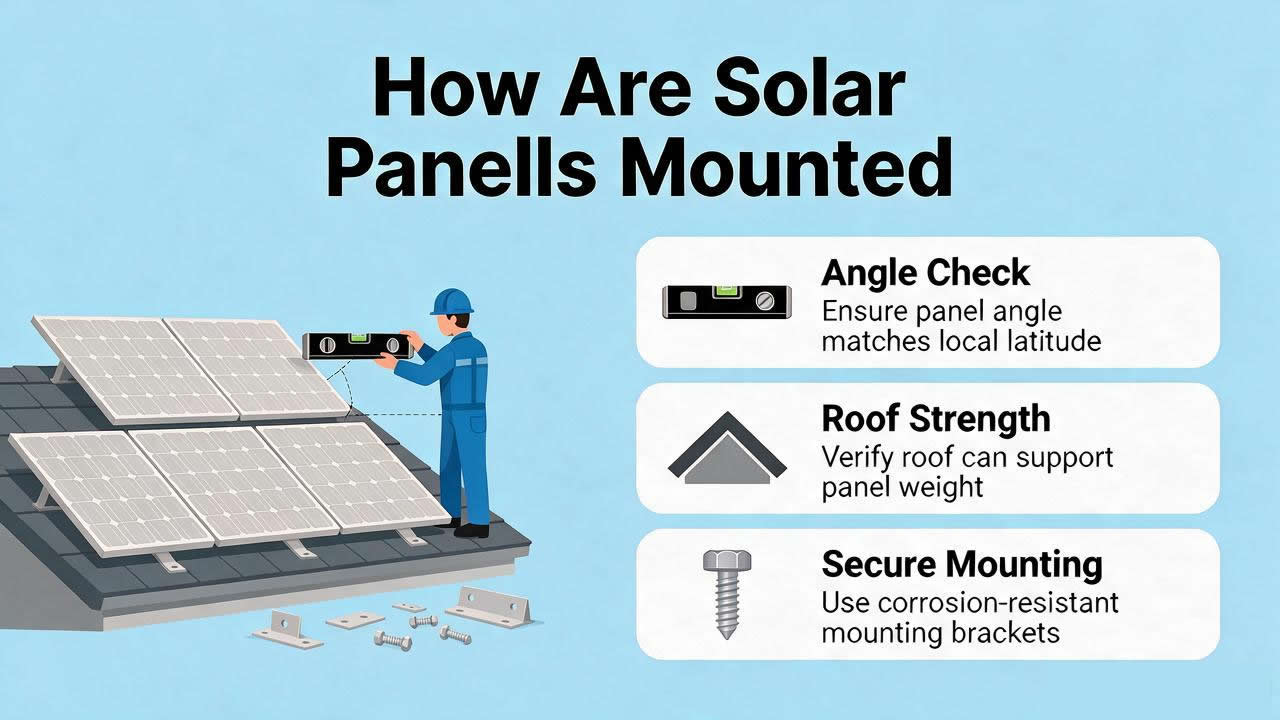
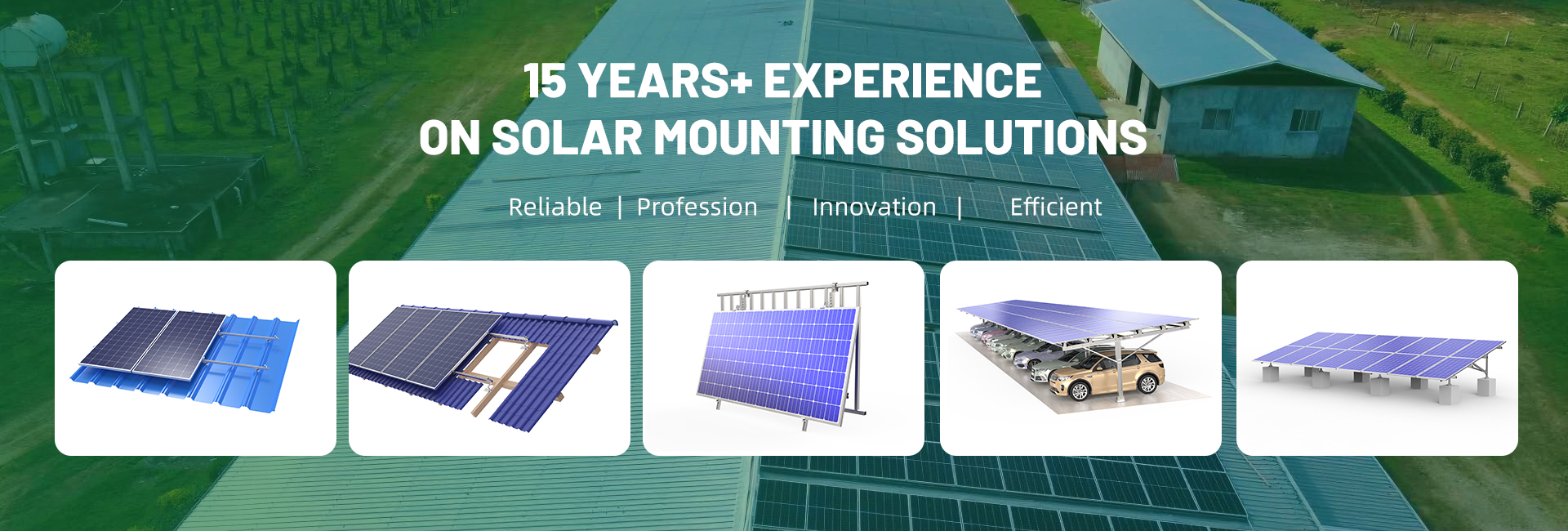
How Are Solar Panels Mounted? Simply put, solar panel installation methods fall into two main categories: rooftop installation and ground-mounted installation.
In rooftop installation,
solar roof mounting brackets are anchored to the building’s rafters or roof using structural components, while ground-mounted installation involves constructing a standalone foundation and support structure on open land.
The choice between these methods depends primarily on your available space, budget, and desired power generation efficiency. Next, I’ll provide an in-depth analysis of the technical aspects of
solar ground mounted systems.
Solar Panels Mounted Main Types
Ground-mounted systems are primarily divided into two categories: fixed-tilt and tracking systems. Fixed-tilt systems are by far the most common on the market; they maximize annual sunlight capture by locking the solar panels at an optimal angle determined through rigorous calculations. This solution features a simple structure, manageable costs, and minimal maintenance requirements, making it the top choice for most projects.
In contrast, tracking systems represent a higher level of technical complexity. They rely on electromechanical drive mechanisms to allow the array of modules to track the sun’s path throughout the day, much like a sunflower. Single-axis trackers typically increase annual power generation by 15%–25%, while dual-axis trackers can boost this by an additional 10%–15%. However, the latter requires a significantly higher initial investment, and because they contain moving parts, their long-term reliability and maintenance require more thorough consideration.
Solar Panels Mounted Core Components
The hardware architecture of a complete ground-mounted PV mounting system consists of the following core components, which work together to ensure the system’s structural integrity and long-term reliability.
Core Components
|
Function Description
|
Common Materials
|
| Foundation Structure |
Transfers upper loads to the ground, providing a stable support platform |
Screw piles, precast concrete blocks, cast-in-place concrete |
| Uprights and Main Beams |
Form the system’s vertical support and primary horizontal load-bearing framework |
Hot-dip galvanized steel, weathering steel, high-strength aluminum alloy
|
| Rails |
Installed on the main beams to directly support and secure the solar panels |
Aluminum alloy (lightweight, corrosion-resistant) |
| Connectors and Fasteners |
Include bolts, clamps, and joint plates, used to secure all structural components |
Stainless steel, hot-dip galvanized carbon steel |
| Grounding System |
Provides an electrical safety path to prevent risks from lightning strikes and electrical leakage |
Copper-clad steel, galvanized flat steel |
Solar Panels Installation Considerations
Before launching a project, there are three core considerations that require thorough evaluation.
First are structural load-bearing capacity and geological conditions. Engineers must accurately calculate the total weight—including modules, mounting brackets, and wind and snow loads—and design the most suitable foundation type based on the soil’s bearing capacity and compressibility to ensure the system does not experience settlement or structural instability over its decades-long design life.
Second is electrical safety and cable management. You need to plan the optimal routing for DC cables, using cable trays or direct-buried conduits to protect the cables from UV radiation and damage by rodents. At the same time, the system’s equipotential bonding and grounding resistance requirements must be strictly enforced to guard against damage from direct and induced lightning strikes.
Finally, the site’s microenvironment and climatic parameters are equally critical. Data such as the historical maximum wind speed at the project location, basic snow load, and whether the site is exposed to high salt fog or high humidity corrosion directly determine your material selection (including whether a higher corrosion protection grade is required) and the safety margin factors in the structural design.
Solar Panels Mounted Common Misconceptions
Misconception 1: The thicker and heavier the steel, the safer it is. This is a classic intuitive fallacy. A structure’s wind resistance and overall strength are not linearly related to steel thickness. By optimizing the cross-sectional shape of the profiles (for example, by adding stiffeners or using closed-section profiles), it is possible to significantly improve the system’s stiffness and modulus of bending without increasing—or even by reducing—the weight.
Misconception 2: The lower the procurement cost of the support structures, the better the project’s economic viability. This view is short-sighted and dangerous. Blindly pursuing low prices often means sacrificing the thickness of the galvanized coating or the wall thickness of the structure. Over the power plant’s 25-year service life, maintenance and replacement costs resulting from corrosion or insufficient strength will far exceed the initial savings on procurement costs.
Misconception 3: All soil types are suitable for direct pile driving. This is not the case. In areas with gravel layers, hard rock, or backfilled soil, direct pile driving is not only difficult to execute but also fails to provide reliable pull-out resistance. In these situations, cast-in-place concrete foundations or screw piles are the more reliable choices.
Solar Panels Mounted Development Trends
Currently, the industry is accelerating its evolution in two directions: intelligent monitoring and extreme prefabrication. On the one hand, “smart brackets” integrated with stress, strain, and vibration sensors are entering commercial use. Operations and maintenance personnel can remotely monitor the structural health of every row of brackets via a cloud platform, truly achieving a transition from “repair after failure” to “predictive maintenance throughout the service life.”
On the other hand, for large-scale ground-mounted projects, modular pre-assembled systems are rapidly becoming the mainstream. Manufacturers pre-assemble columns, main beams, and some connectors into standard shipping units at the factory, requiring only simple on-site hoisting and assembly. This approach reduces the time spent on high-altitude work at the site by more than 40% and significantly lowers installation errors and labor costs.
6. Summary
In summary, solar panel mounted is a comprehensive systems engineering project that integrates knowledge of structural mechanics, geotechnical engineering, electrical codes, and meteorology. From fixed mounts to tracking systems, and from foundation selection to corrosion protection design, every step influences the power plant’s energy generation revenue and operational safety for decades to come. Only by thoroughly understanding these technical details can you ensure your investment yields long-term and stable returns.
Choose Exten
Exten is committed to providing highly weather-resistant aluminum alloy and galvanized steel mounting solutions. Our products feature precision pre-assembly designs and corrosion protection processes that exceed industry standards, aiming to deliver more reliable structural support that is quicker to install.
FAQ
Q: How can I determine if my land is suitable for ground-mounted installation?
You need to assess the land’s slope, soil type, presence of obstructions, and ease of obtaining construction permits. Generally, open areas with a slope of less than 15 degrees, deep soil, and no tall obstructions are ideal.
Q: What is the optimal angle for a fixed-tilt mounting system?
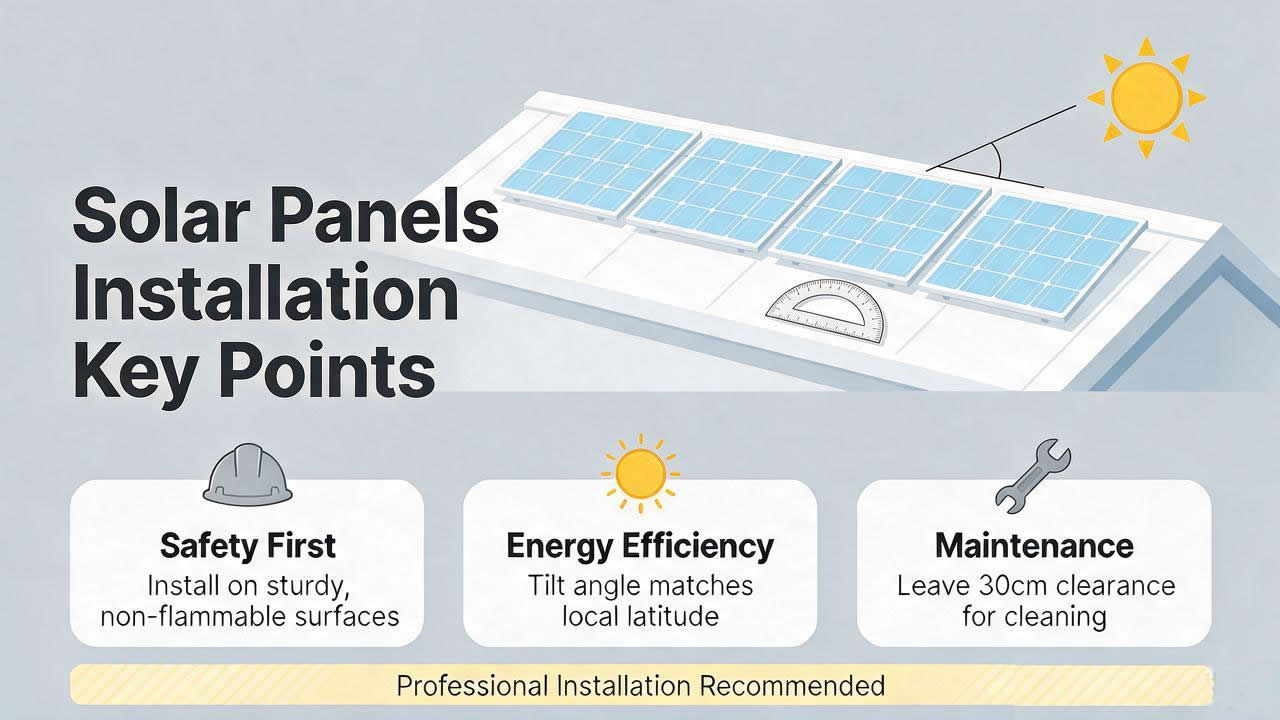
The optimal tilt angle is typically close to your local latitude but is not exactly the same. It requires simulation and optimization using professional software based on local annual sunlight data and meteorological conditions to determine the angle that maximizes annual power generation.
Q: Can the additional power generated by a tracking system offset its extra cost?
This depends on local electricity rates and solar resources. In high-irradiance areas, the power gain from a tracking system typically results in a better internal rate of return (IRR) for the project; however, in low-irradiance areas or regions with lower land costs, fixed mounting systems may offer better economic value.
Q: What is the service life of a mounting system?
When designed and installed in accordance with specifications and requirements, steel mounting systems treated with hot-dip galvanization and high-quality aluminum alloy mounting systems typically have a design service life of over 25 years, matching the lifecycle of solar modules.
Q: Does the installation process require special heavy machinery?
Yes, the installation of ground-mounted power plants typically requires pile drivers, excavators, or small cranes for foundation construction and pole hoisting. For screw pile foundations, specialized rotary drilling equipment is needed to drive the piles into the ground.


