Let’s get right to the point. What is a solar carport mounting system? It’s a metal frame—usually made of hot-dip galvanized steel or high-strength aluminum alloy—that positions solar panels directly above a parking space.
This isn’t just for show; its job is simple: to suspend the panels above your car’s roof, converting sunlight into direct current, all while allowing you to park your car without any delay. Structurally speaking, this system must withstand strong winds, support snow loads, and resist salt fog corrosion—all while ensuring that the SUV or van parked below can easily enter and exit. So, when you asksolar carport mounting system is, you’re really asking: How does it stay stable outdoors, generate power for the long term, and not get in the way? It’s that straightforward.
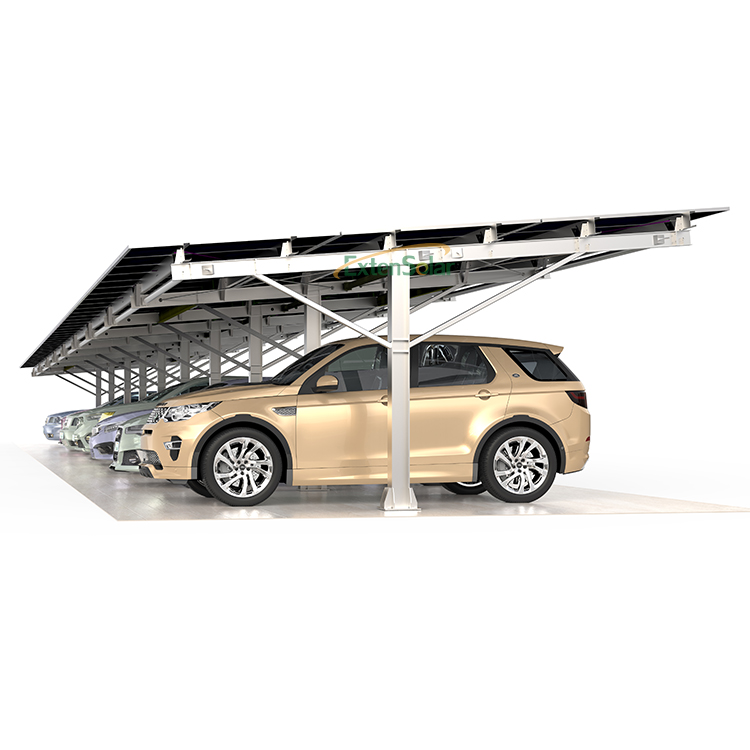
What types solar carport mounting system are?
Main Types: Categorized into Three Classes
Although there are many variations on the market, they can actually be grouped into three main categories.
The first type is the column-supported design. Several large-diameter round or square tubes are erected vertically, with horizontal main beams laid across the top, and the panels arranged in an inclined pattern. This is the most traditional design, with clear load-bearing paths and quick installation, making it suitable for large, open parking lots.
The second category is the single-sided cantilever style. It features columns on only one side, with the other side cantilevered out, leaving the area underneath completely unobstructed—making it especially easy to back into a parking space. However, the cantilever design places high demands on the rigidity of the main beams, which increases steel usage, so you’ll need to set aside a sufficient budget.
The third type features curved or irregularly shaped roofs, designed primarily for architectural aesthetics or efficient drainage. The curved surfaces offer good self-cleaning properties, but both fabrication costs and installation precision are significantly higher than the first two types. No matter which type you prefer, it’s essential to return to the fundamentals: the criteria for evaluating solar car mounts remain unchanged—reasonable load-bearing design, adequate corrosion protection, and sufficient headroom. Don’t let aesthetics sway your judgment; structural stability is paramount in engineering.
Where You actually use a solar carport mounting system?
The most typical locations for these systems are employee parking lots in industrial parks and large logistics centers. With thousands of square meters of open-air parking spaces where interior temperatures can soar to 60–70 degrees in the summer sun, installing a solar carport mounting system with solar panels not only provides shade and cools the vehicles but also generates enough electricity daily to power office building lighting or charge electric vehicles—delivering dual benefits.
Next are transportation hubs—airports and high-speed rail stations with long-term parking lots where vehicles stay parked for days at a time. With the overhead space otherwise unused, installing a solar system there generates electricity that can power nearby charging stations or surveillance equipment. Moving further out to the suburbs, these systems are also becoming common in agricultural machinery parking areas next to greenhouses, where the electricity directly powers drip irrigation systems and roller shutter motors—making them highly practical. You’ll find that no matter how the application scenarios change, the answer to the question “What is a solar carport mounting system?” remains the same: it’s a tool that transforms idle overhead space into a metered power-generating asset. The more expensive the land and the higher the electricity rates, the shorter the payback period.
How to Choose a right solar carport mounting systems for you?
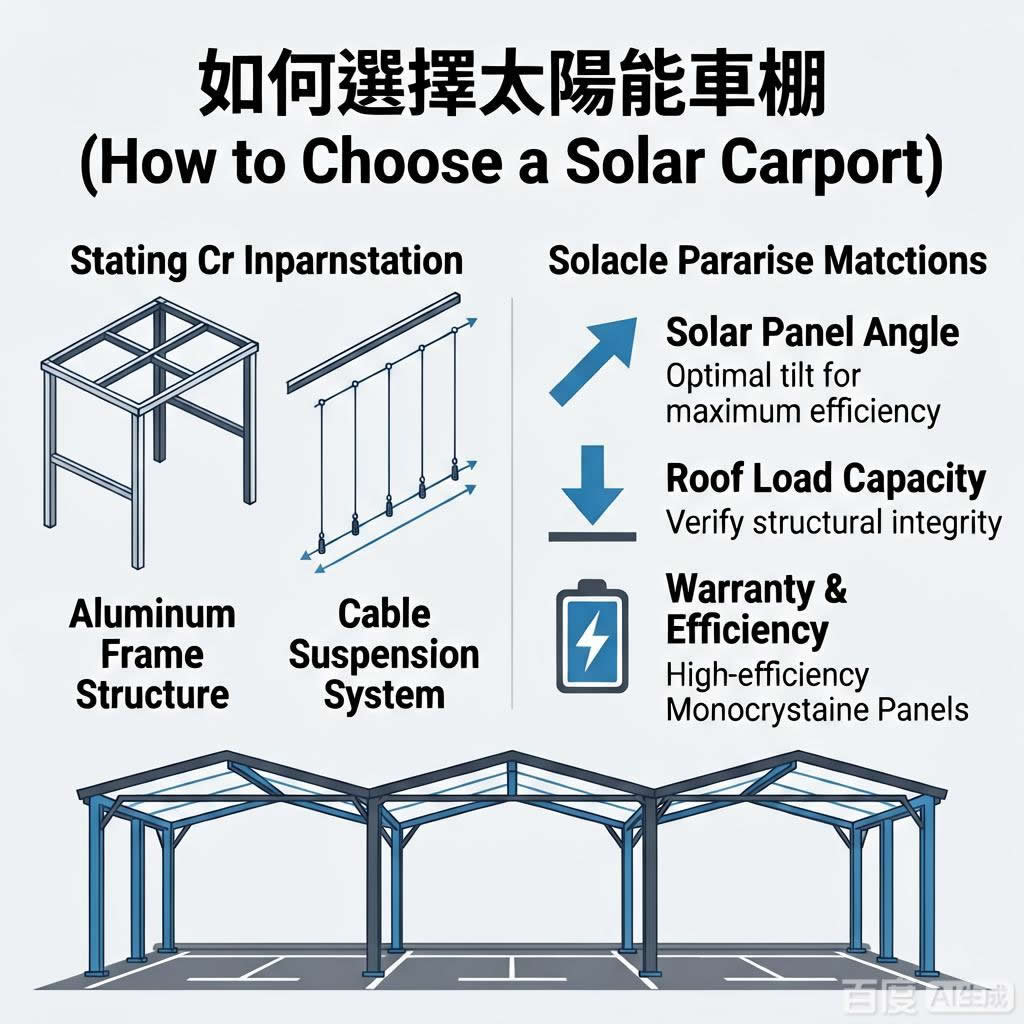
Don’t start by asking about the unit price. Do these three things first. First, measure the largest vehicle that will operate on your site—whether it’s a standard sedan or a high-roof cargo van. A difference of just over one meter in clearance height completely changes the entire structural load-bearing model. Second, check with your local meteorological office for extreme wind speeds and typical snow loads over the past decade; these are the absolute minimum requirements for structural design and cannot be estimated on a whim. Third, confirm the module type—double-glass or single-glass. Differences in size and weight directly affect purlin spacing and fastener specifications. Once these three factors are determined, consider the corrosion resistance rating—if located near the coast or in a heavy industrial area, the galvanized coating thickness must start at at least 85 micrometers; inland, it can be appropriately reduced. Regarding installation methods, opt for prefabricated systems whenever possible. On-site welding takes a long time, and quality depends on the workers’ skill—it’s not cost-effective. Ultimately, when selecting a solar car mount, the question isn’t whether it looks good, but what your wind loads, live loads, and seismic design requirements are. If you’re unsure, have a professional structural engineer review the design—this isn’t an area to cut corners.
Final Thoughts
Simply put, solar car mounts aren’t some kind of “black technology”; they’re a mature, calculable, and replicable structural power-generation solution. They transform parking spaces from single-purpose areas into dual-purpose “parking + power generation” spaces, with a clear payback period and controllable operating and maintenance costs. From start to finish, you only need to focus on one core concept—what a solar carport is—it’s the essential structure that turns the sunlight above your head into financial returns. Choose the right model, lay a solid foundation, and you’ll have virtually nothing to worry about for the next twenty years.
FAQ
Q1: What is the difference between a solar carport and a color-coated steel roof mounting system?
The biggest difference lies in clearance and load capacity. Roof mounting systems are close to the roof surface and are primarily subjected to wind suction forces; carport mounting systems have a clearance of at least 2.8 meters, requiring separate calculations for lateral wind pressure and snow loads. Additionally, since there are moving vehicles below, impact loads cannot be ignored.
Q2: What is the approximate service life of the mounting system?
The main structure is designed for 25 years, but the actual lifespan depends on the quality of the corrosion-resistant coating. Hot-dip galvanizing with a thickness of 85 micrometers or more will last 25 years under normal conditions; in coastal or high-humidity areas, we recommend upgrading to aluminum-magnesium-zinc coating or applying a zinc-rich primer.
Q3: Does the base foundation have to be made of concrete?
Most permanent projects use independent concrete foundations or helical piles. Prefabricated counterweight blocks are used only for short-term, temporary installations, but they have poor overturning resistance and are not recommended for areas with heavy pedestrian or vehicle traffic.
Q4: What are the key points for ongoing maintenance?
Before the start of winter each year and after the typhoon season ends, check bolt torque, the appearance of welds, whether drainage channels are clogged, and whether component clamps are loose. These tasks can be performed by a regular electrician with a toolkit; no heavy machinery is required.
Q5: Will rainwater leak onto the cars?
No. The modules are connected with sealing strips and drainage channels; rainwater flows down the sloped surface into downspouts at both ends, so the parking spaces remain mostly dry. However, if a module is damaged, it must be replaced promptly; otherwise, localized leaks may occur.


