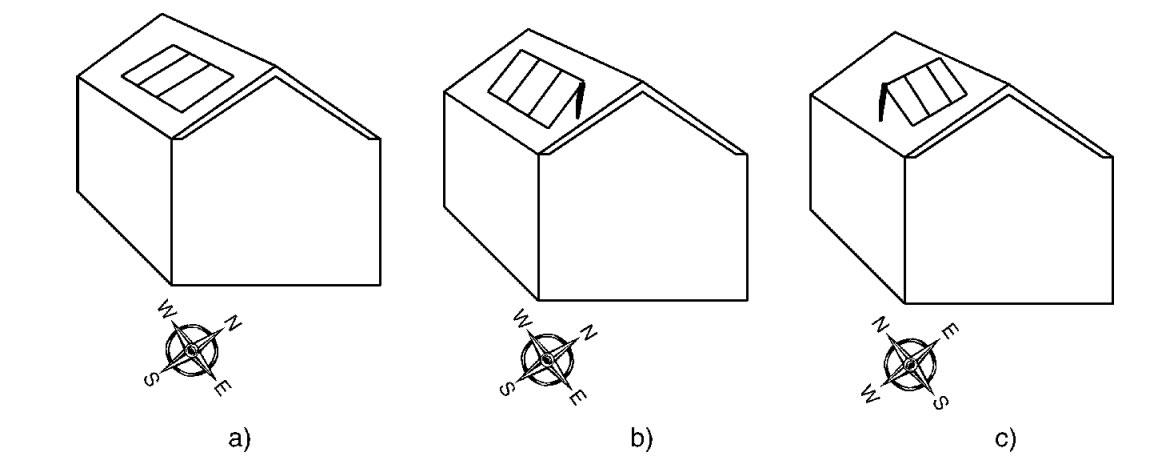
To maximize energy output, photovoltaic modules need to face the optimal sun direction and fit closely with steep south-facing roofs; for low-slope roofs, tilting settings are required to help air circulation; the fin-style design can absorb energy throughout the day, and also can limit the density of the modules and is not restricted by appearance.
The orientation of photovoltaic modules can result in a 25% to 30% variation in energy yield. It is crucial to consider how
to orient the modules to maximize sunlight exposure throughout the day. A key parameter is the angle of incidence (AOI) formed between the sun, the photovoltaic modules, andthe horizon. Standard installations face south with an inclination angle of 20° to 65° relative to the horizon; when the angle of incidence on the PV module surface exceeds 60°, the amount of sunlight received throughout the day decreases significantly. Smaller angles can maximize light intensity, thereby reducing the number of PV modules required for a rooftop installation. Therefore, the angle and PV module density are optimized based on the required energy output.
Sloped roofs, such as those on residential homes, present unique challenges for PV module installation. These types
of installations are determined by the angles formed between the modules. Flush-mounted installations sit flush with the roof surface; this installation method is particularly suitable for south-facing homes with steep roofs. Convection between the PV modules and the roof can increase the operating temperature of the modules, thereby reducing expected energy output. Sloped installations are used for roofs with lower pitch. The edges of the PV modules slope upward from the roof, improving airflow but limiting the number of modules that can be installed without shading. Finally, the fin-style installation is the least aesthetically pleasing option, as it significantly alters the building’s 30 Solar Manufacturing: Environmental Design Concepts for Photovoltaic Modules:
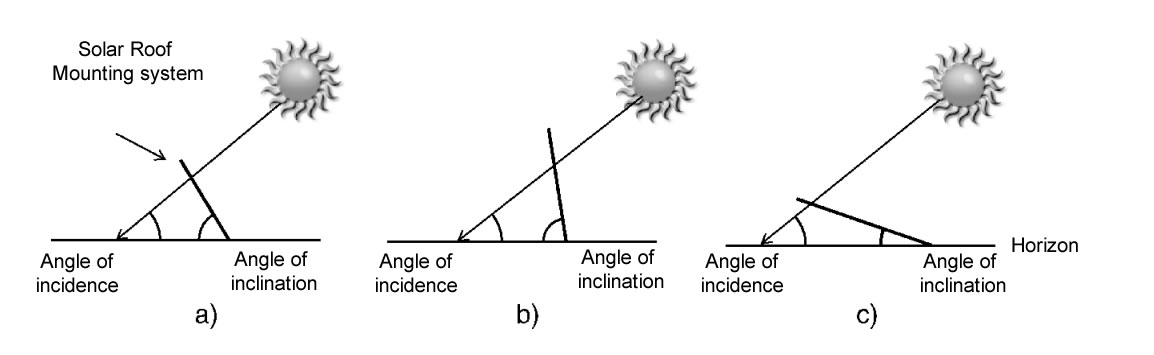
a) The ideal position that maximizes both the number of modules on the roof and the amount of incident light;
b) The tilt angle is too steep to optimize incident light;
c) The tilt angle is too shallow for the roof to support too many modules.
These are common installation techniques for shallow roofs facing east or west. If
modules are installed at a certain angle on the roof, energy can only be harvested during half the day. For fin-style
installation, although the roof area is not fully utilized, the modules can harvest energy throughout the entire day.
a) Flush mounting; b) Tilted mounting; c) Fin-style mounting of modules on a sloped roof