Market got three main picks: fixed-tilt holds, ballast-held systems, and ground-held systems. Which Best Flat-Roof Solar Mounting System you pick depend on your roof stuff, money, and local wind load rules.
Flat roof sun panel hold things big different from slope roof ones. You can't just put sun panels flat on flat roof, 'cause when flat, sun light can't hit them straight, make 15% to 30% less power make. You need use a hold system to lift panels and tilt them at some angle.
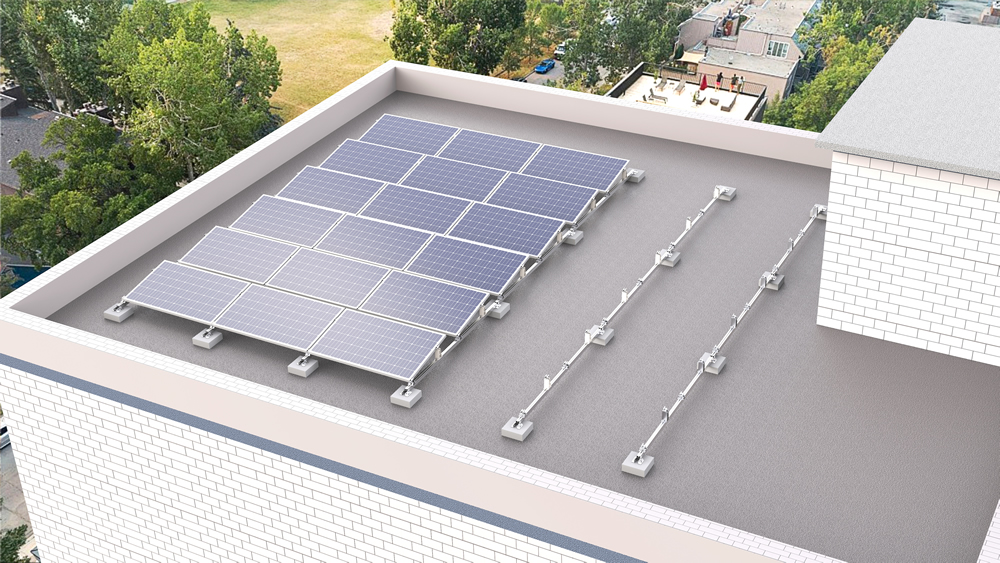
Fixed-tilt mounts are the most common fix. They use a triangle metal frame to hold the solar panels at a set angle, usually 10 to 30 degrees. Good thing is it's the cheapest and fastest to put up, with a system taking only two to three days to install. Bad thing is the tilted panels can shade the rows behind them, so you need to make more space between rows. This means less panels can go on the same roof area. Also, the mounts must be bolted through the roof's waterproof layer and fixed to the structure, making a risk of leaks at each hole spot. If you have a big commercial flat roof with good waterproof and don't mind drilling holes, this is the most cheap option.
Ballast racks fix water leak problem. They use concrete blocks to push down racks, no roof holes at all. Solar panels put on slanted frame, concrete blocks sit at frame bottom. Block number and weight get figured from local wind speed, usually need 10 to 20 kilos per square meter. Good thing of this fix is zero holes, so it not break old waterproof layer; rented buildings often need this way. Bad thing is concrete blocks add big weight on roof, not every roof can hold it. Also, in high wind spots, you need real heavy blocks, which might need make roof stronger—cost more. If your roof can carry enough weight or you can't drill holes in roof, ballast system is safest pick.
The ground-anchored mounting system is the most safe way. It use small steel sticks that go through roof and insulation layers and are push all down into the structure floor slab under. The solar panels are put on these steel sticks. This system give the most high safety in high-wind and hurricane places, as the mounting thing become a part of the building and can't be blow away by wind. The bad side is it have the most high install cost; each hole need complex waterproofing, and the exact spot of the structure floor slab must be know. For big commercial jobs or roofs plan for other future uses (like put equipment or green roof), the ground-mounted system is the most trusty pick.
You also need think about system's tilt change. Most fixed mounts got one angle, but some fancy systems have moving hinges. You can do manual angle change every six months: make it steeper in winter and flatter in summer. This can give extra 5% to 10% power each year. If your money allows, you could even pick a single-axis tracking system, that let solar panels follow sun's move all day, making power go up by 20% to 30%. But tracking systems cost a lot, and their moving parts need fix; they not common on flat roofs unless you have a real big business project.
So, do things in this order. First, check if roof can hold more weight; if no, pick either ground anchors that go through or fixed-tilt mounts. Next, see if drilling is okay; if landlord says no, go for ballast-mounted systems. Last, think about wind speed; if you're in hurricane area, pick ground-mounted systems. For most flat roofs, ballast-mounted system is best—it mix cost, safety, and waterproofing good. If roof not strong enough, use fixed-tilt brackets and make sure waterproof at every hole. Pick right system, and flat-roof solar can work good for over 25 years.


